One of the biggest misconceptions about foodborne illness investigations is that investigators must find the bacteria or parasite in the food itself before they can identify the source. That’s not how many food safety investigations work.
By the time an outbreak is recognized, the food has often been consumed, discarded, or spoiled. Testing a leftover sample may no longer be possible—or it may not accurately represent the product that made someone sick.
Instead, investigators often rely on a combination of evidence:
-
Patient interviews and food histories;
-
Medical records and laboratory testing;
-
Epidemiological analysis identifying common exposures;
-
Traceback investigations following products through the supply chain;
-
Distribution and purchasing records; and
-
Manufacturing and production records.
No single fact usually tells the whole story. But when epidemiology, traceback, medical evidence, and distribution records point in the same direction, the combined evidence can be powerful.
Three recent FDA investigations illustrate why.
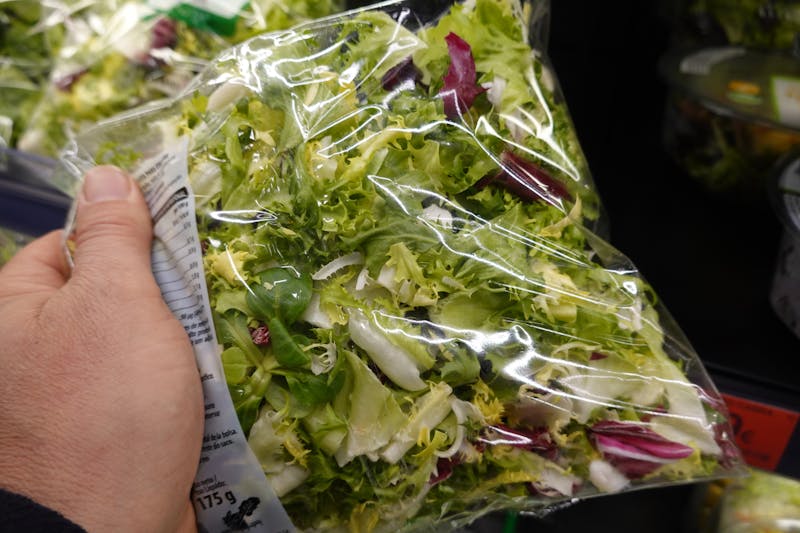
Iceberg Lettuce (Cyclospora). On July 30, 2026, FDA announced that an initially reported positive lettuce sample in its investigation of a multi-state Cyclospora outbreak was ultimately determined to be a false positive. Nevertheless, FDA continued to identify iceberg lettuce supplied by Taylor Farms de Mexico as the likely source based on epidemiological evidence, ingredient tracing, and traceback investigations—not laboratory confirmation alone.
The investigation has since expanded substantially. As of August 5, 2026, FDA reported 6,358 illnesses, 278 hospitalizations, and two deaths across 15 states associated with the outbreak. The increase underscores an important feature of foodborne illness investigations: the evidentiary picture often develops over time as investigators gather additional patient interviews, exposure histories, and traceback information.
Jalapeño Peppers (Salmonella Javiana). On August 5, 2026, FDA reported 345 illnesses across 27 states and 36 hospitalizations linked to jalapeño peppers grown in Sinaloa, Mexico, and distributed by Coast Citrus Distributors.
The epidemiological signal was striking. Of 191 people interviewed, 177—93%—reported eating at a Mexican-style restaurant before becoming ill. FDA’s traceback also showed that Chipotle and QDOBA locations received jalapeños imported by the same distributor, and investigators traced the peppers to a common grower in Mexico.
Frozen Blueberries (E. coli O145\:H28). On July 29, 2026, Publix expanded its recall to all lots of GreenWise Organic Frozen Whole Blueberries and Whole Mixed Berries after FDA’s investigation identified 12 illnesses and four hospitalizations associated with the outbreak. Public health officials relied on epidemiological information and product traceback, and FDA subsequently placed the Chilean supplier’s frozen blueberries on an import alert.
These investigations followed different evidentiary paths. The lettuce investigation continued despite the absence of a confirmed positive food sample. The jalapeño investigation produced a powerful epidemiological pattern combined with traceback evidence. And the blueberry investigation led to escalating regulatory action as additional evidence developed.
Together, they demonstrate the same principle: food safety investigations rarely depend on a single fact. They depend on how all of the facts fit together.
The absence of a positive food test is not the same as the absence of evidence. The question isn’t whether one fact proves everything. It’s whether the evidence, viewed together, reveals what happened.
When food causes harm, facts matter.
Source: U.S. Food & Drug Administration Recall Alerts